Clay and the Four Elements
How Earth, Water, Air, and Fire Create Art
Why pottery is one of the few art forms that brings all four forces of nature together in your hands.
Where Art and Nature Meet
Since ancient times, people have looked at the natural world in terms of four basic elements: earth, water, air, and fire. A pottery studio is one of the few places where you can actually watch clay and the four elements come together to create something completely new.
Clay comes from the earth, is shaped with water, dries in the air, and gains its permanent strength in fire. Every piece of pottery depends on all four. The artist may guide the clay with their hands and imagination, but nature remains part of the process from beginning to end.
I learned just how literally true that was when I was in college taking art classes. One of our assignments was to dig raw clay straight from the ground.
I found a dry creek bed about 12 feet deep, dug clay from the side wall, and hauled heavy buckets of it back to the studio. I spread it out to dry for days, broke it apart, and carefully sifted out the rocks, roots, and the occasional bug. Once it was clean, I added water back in, worked it to the right consistency, and wedged it smooth before I could even begin making anything.
That experience completely changed the way I saw clay. It wasn't just something that came in a bag from an art supplier. It had come straight out of the earth. I wasn't simply imposing my ideas on a material—I was working with something nature had already spent thousands of years creating.
And from beginning to end, all four elements would play a part in what it eventually became.
Earth: Where It All Begins

Clay begins with rock. Over enormous stretches of time, weathering breaks rock down into extremely fine mineral particles. Those clay deposits can collect in places such as riverbeds and floodplains, and their mineral composition affects everything from color and texture to how the clay behaves when it's fired.
When you think about it, making pottery means you're shaping material that literally came from the ground beneath our feet.
I still remember digging that clay out of the creek bed in college. It was heavy and cool, and pulling it out of the ground felt a little like uncovering something ancient. This raw, gritty material was going to become something I could shape with my own hands.
That's where every piece begins: earth.
Water: Finding the Right Balance

In nature, water is a sculptor. Given enough time, it carves valleys, wears away rock, moves sediment, and reshapes the landscape.
Water transforms clay, too.
Add the right amount and clay becomes soft, pliable, and responsive—ready to take on whatever form the artist has in mind. But water also makes you pay attention.
If clay gets too wet, the piece can slump under its own weight. If it gets too dry, it may crack when you try to shape it. You can't just bully clay into doing what you want. You have to learn to feel what it's doing and give it what it needs.
That's part of the relationship between the artist and the clay. You bring your ideas to it, but you also have to respond to the material in front of you.
Air: The Art of Waiting
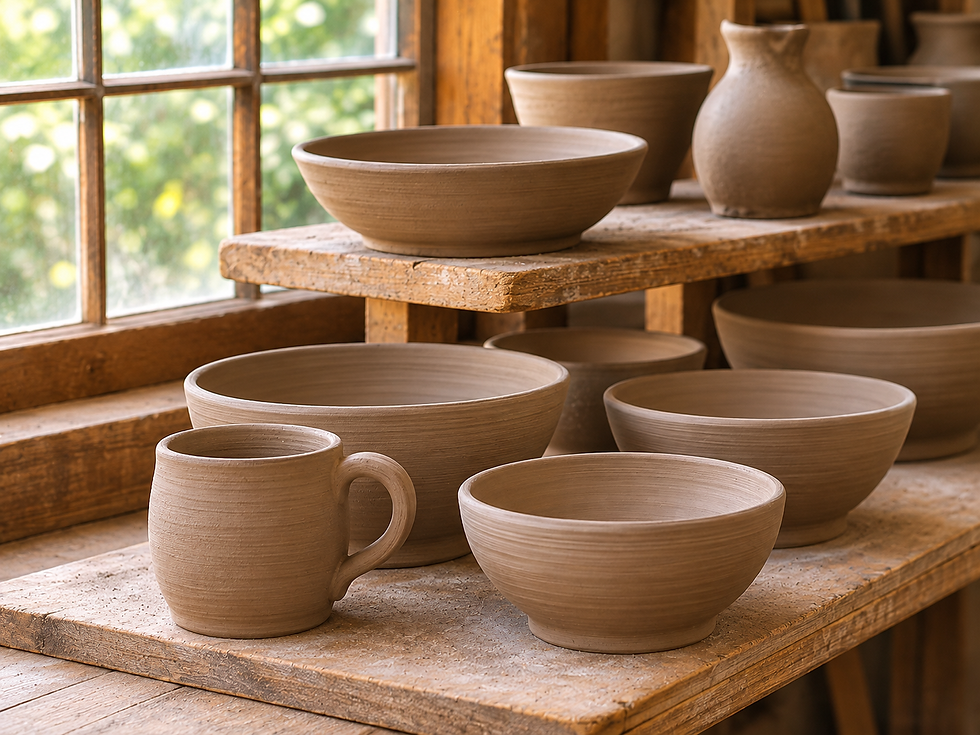
Once clay has been formed, it has to dry.
Air slowly draws moisture from the clay until the piece becomes firm and eventually bone dry. At that stage it can hold its shape, but it's also incredibly fragile.
And you can't rush it.
Dry a piece too quickly or unevenly and you risk warping or cracking. Sometimes the best thing you can do for a piece of pottery is simply leave it alone and let time and nature do their job.
I remember waiting for those pieces made from my creek-bed clay to dry. I'd check them every day, touching the surface and feeling the cool dampness gradually disappear.
The air was doing its work even though I couldn't see it.
Sometimes the hardest part of creating really is waiting.
Fire: Transformation and Permanence

Finally comes fire.
Inside the kiln, temperatures climb high enough to permanently change the clay. What went into the kiln as fragile, bone-dry clay comes out as ceramic.
Fire reveals the final character of the piece—its strength, color, surface, and sometimes a few surprises. Once clay has been properly fired, it can never be turned back into workable clay again.
I'll never forget opening the kiln after firing the clay I had dug from the ground. The pieces were rich with earthy tones, their surfaces transformed in ways I couldn't have completely predicted beforehand. They looked both ancient and new at the same time.
Something nature had taken thousands of years to create had passed through my hands and become something that had never existed before.
Bringing Clay and the Four Elements Together
That's what still fascinates me about clay.
Earth gives us the material.
Water makes it workable.
Air prepares it.
Fire makes the transformation permanent.
Take away any one of them and the process doesn't work.
And somewhere in the middle of those four natural elements are our own two hands—shaping, building, experimenting, making mistakes, and bringing our own ideas to something nature began long before we ever touched it.
That's what makes pottery such an unusual partnership between artist and nature. We don't create the material or control every part of the process. We work with it. We learn its limits, respond to it, and add something of ourselves along the way.
Earth, water, air, fire, and human hands come together to create something that didn't exist before—and that, to me, is part of the magic of working with clay.
Create with the Elements at Fire It Up Pottery & Art Studio
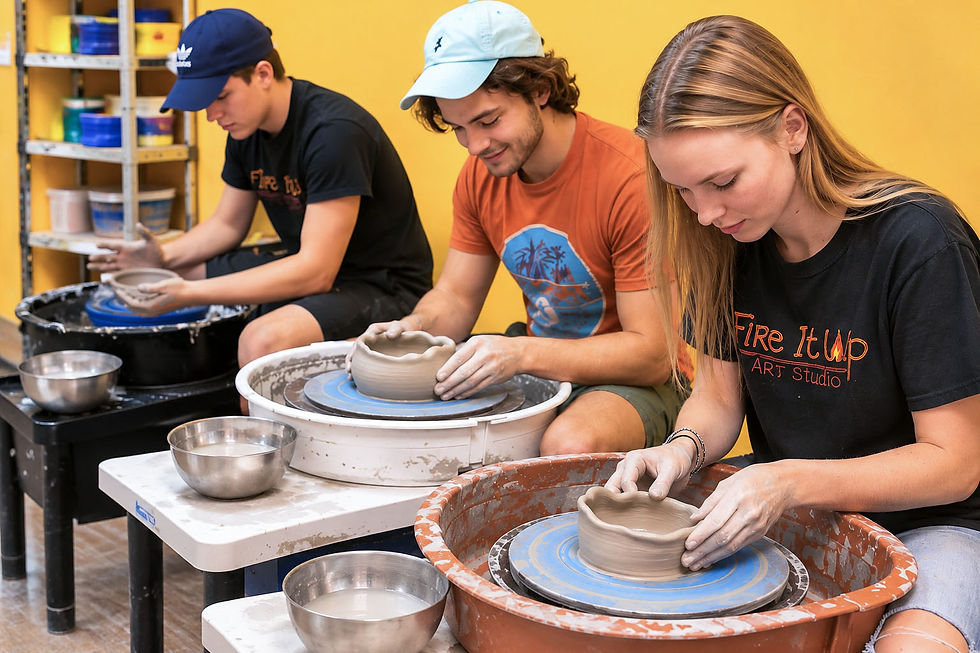
You don't have to dig your own clay out of a creek bed to experience the magic of working with it. (We'll save you that part!)
Whether you're trying clay for the first time or you've been making pottery for years, there's something special about taking a simple piece of clay and discovering what your own hands can make from it.
Come create with us at Fire It Up Pottery & Art Studio and experience earth, water, air, and fire for yourself.