


7 Common Mistakes Beginners Make on the Pottery Wheel — And Why They Happen
Updated: 5 hours ago
Learning the wheel takes practice—but a few small adjustments can make a big difference.
The pottery wheel looks effortless when you watch an experienced potter. Clay rises smoothly, walls thin evenly, and everything seems calm and controlled.
Then you sit down at the wheel yourself…and suddenly the clay has other plans.
It wobbles. Collapses. Sticks to your hands. Or somehow turns into a shape you definitely didn't intend.
If that sounds familiar, you're not alone. Almost every beginner struggles with the same challenges—not because they're doing badly, but because the pottery wheel requires your hands and body to develop muscle memory for movements they've never practiced before.
Understanding why these common pottery wheel mistakes happen can make learning the wheel a lot less frustrating.
1. Not Using the Right Amount of Pressure
One of the most common beginner mistakes is using either too much pressure—or not enough.
Some students try to muscle the clay, while others rest their hands lightly on it and wonder why nothing changes. The wheel needs something in between: calm, focused pressure.
I often tell students that when you watch an experienced potter, the clay looks like butter—as if it moves just because their hands are there. But clay isn't butter. It doesn't move unless you give it clear, steady direction.
2. Not Bracing Your Body
Your hands can only be as steady as the body supporting them.
When your elbows float in the air, every small movement transfers directly into the clay. Experienced potters anchor their arms against their legs, hips or sides so their hands stay stable.
Think of your body as the foundation that supports everything happening at the wheel.
3. Too Much Water (Yes, Really)

Water feels like the solution to everything at first—until your clay suddenly turns slippery and impossible to control.
Too much water weakens the clay and removes the friction needed for shaping. Too little water causes grabbing and frustration.
You're aiming for clay that feels smooth and responsive—a glide, not a slip-and-slide.
4. Moving Too Fast
Because the wheel spins quickly, beginners often feel like they need to move quickly too.
But clay responds best to slow, intentional movements. Give each step time to work before changing your position or pressure. Slow your hands down and give the clay time to respond.
5. Skipping the Importance of Centering
Many shaping problems actually begin before shaping even starts.
If the clay isn't centered, everything that follows becomes harder. Opening, pulling walls, and forming shapes all depend on balance first.
If centering feels confusing, I explain the simple physics behind why it works in this companion post:
The Physics of Centering Clay
Understanding what's happening often makes the process click faster.
6. Trying to Fix Everything at Once
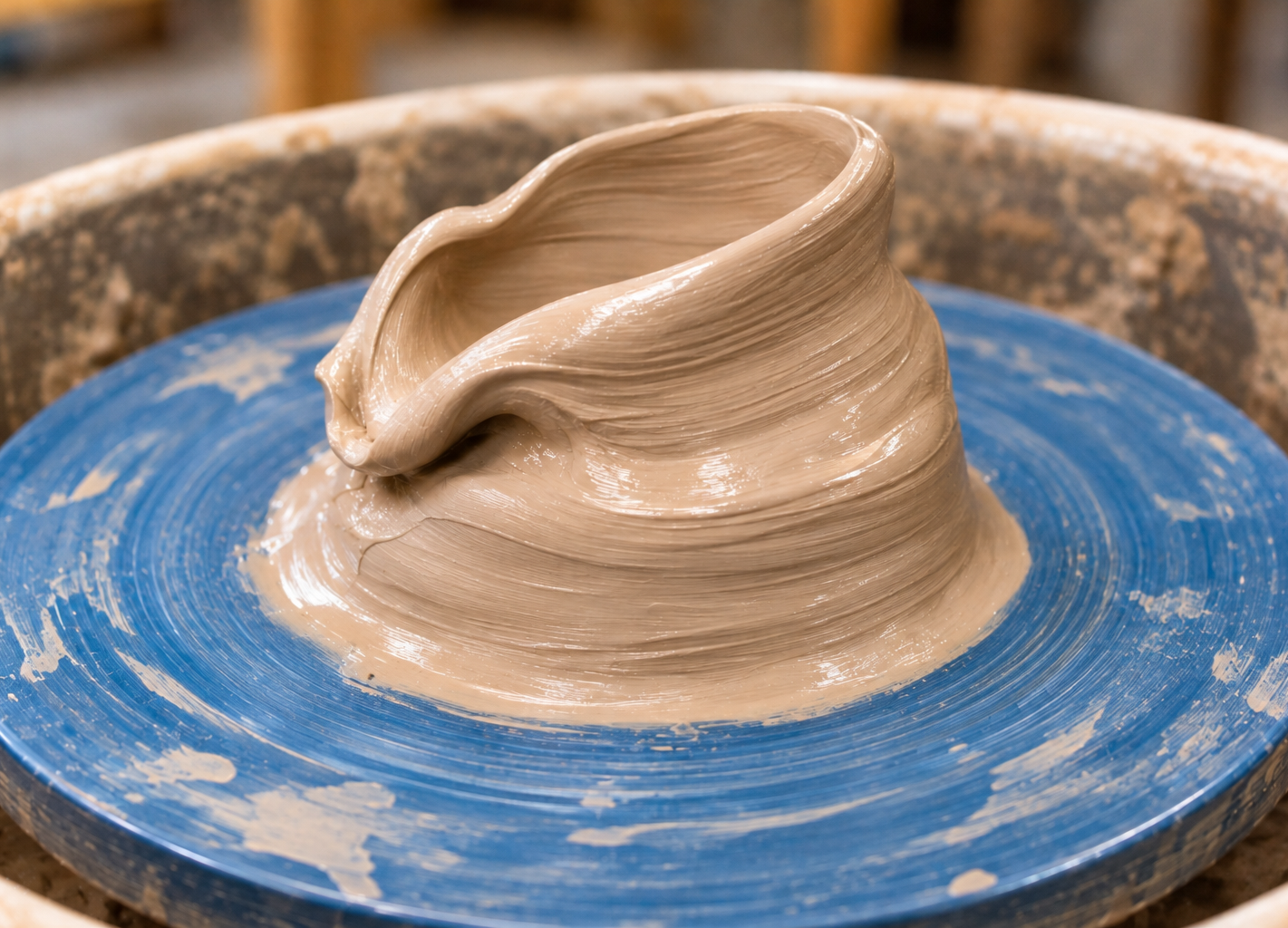
When something goes wrong, beginners often react quickly, moving both hands and changing multiple things at the same time.
Pottery works better when you adjust one thing at a time. Slow down, make a small change, and let the clay respond.
Small adjustments are often where the biggest breakthroughs happen.
7. Expecting Perfection Too Soon
This may be the most common mistake of all—expecting to feel comfortable on the wheel right away.
Learning the pottery wheel is actually two different kinds of learning happening at once.
Centering clay is a little like learning to ride a bike.
At first it feels impossible, and then suddenly something clicks. Once your body understands that balanced feeling, it starts to make sense.
But becoming proficient on the wheel is different.
That part is much more like learning to play piano or guitar.
If you take one piano lesson, you don't go home and immediately play a song. You go home and practice scales. Your hands are learning coordination, pressure, and timing through repetition.
The pottery wheel works the same way.
Each time you sit down at the wheel, your hands are learning something new. Progress comes from practice and dedication more than natural talent. With time, movements that once felt awkward begin to feel familiar—and confidence grows from there.
Almost everyone can learn the wheel. The key is allowing yourself to learn gradually.
The Secret to Overcoming Pottery Wheel Mistakes

Every experienced potter has made plenty of wobbly pots.
Progress doesn't happen all at once. It happens in small “click” moments—when something suddenly feels easier than it did the day before.
Those moments come from practice, guidance, and patience with yourself.
And honestly, that learning process is part of what makes pottery so rewarding.
Want to Try the Wheel Yourself?
Reading about the pottery wheel is helpful, but nothing compares to sitting down and feeling the clay move under your hands.
Our One-Time Wheel Classes are designed for beginners—no experience needed.
Private lessons are also available for those who want more individualized instruction.
Everyone starts as a beginner—and with a little practice and dedication, you might be surprised by what your hands can learn to create.
